Breaking down the barriers to HVO adoption
HVO has been identified in research as the single most impactful way of reducing leisure marine industry emissions today, but what is preventing widespread adoption in a sector known as a leader of new technologies? Here we bring you a summary of some of the points made from The Next Step for HVO: Breaking Down the Barriers to Adoption panel discussion during last year’s edition of The Superyacht Forum.
Author  Kim Hollamby
Kim HollambyFriday, 27 March 2026

Session chair, Hanna Dabrowska, Technical Director of the Water Revolution Foundation, laid out a stark picture of why the superyacht sector needs to address its internal combustion engine generated emissions. According to research, 1500 hours of superyacht operation on diesel fuel leads to 1,205,380kg of CO₂ generation – equivalent to the annual emissions of 903 cars. Fortunately, there is a very practical answer to greatly reducing that environmental impact.
Hydrotreated Vegetable Oil – commonly known as HVO – offers up to 90% reduction of well-to-wake emissions compared to fossil diesel. The CO₂ produced during HVO combustion is biogenic in origin and reabsorbed in the carbon cycle, unlike diesel that adds ‘new’ CO₂ to the atmosphere, contributing to global warming.
HVO burns cleaner and doesn’t have that typically offensive smell of diesel when stored or burnt; so the experience of owners and their guests is better, the crew have less hull cleaning to do, and engines typically stay healthier. HVO is better in long-term storage. It's got a much lower propensity to water compared to gasoil and water molecules remained emulsified in the solution. That makes it highly unlikely to contract microbial growth. It also has a higher flashpoint and a much lower clogging point, a major reliability benefit in colder climates.
Almost all modern diesels and many older ones can use this fuel, subject to manufacturer approval. HVO is a drop-in fuel, so it can be mixed with gasoil in varied ratios. It is typically 5-7% lighter per unit volume but still produces around the same power as gasoil thanks to its higher cetane number.
HVO is also compatible with SCR (Selective Catalytic Reduction) systems and typically requires less urea injection. Given urea is supplied in container form to superyachts, that will also lead to a reduction in cost, labour and packaging waste.
So why isn’t the superyacht industry running on HVO yet?
Chris Warde Head of Peninsula Yacht Services adds:
Berthet and Lammouche have been early pioneers of HVO adoption and their experience of finding places to fuel up has not been as difficult as you might imagine:
Warde explained why some markets are better served than others:
In terms of availability though, you have got to look at shore side markets. HVO is being adopted heavily for power generation and transportation in Europe, which is why Lammouche has been able to bunker HVO in continental Europe. Most major road hauliers in that region have transitioned to HVO and a lot of the remote power generation has gone that way as well, so the distribution is there. When you go to islands, such as the Balearics, Malta and Corsica, then you have a smaller shore side demand for the product and storage capacity is much less. There’s no HVO in Africa or the Caribbean due to zero shore side demand. America is a big producer of HVO, but it is very difficult to get it onto yachts because the delivery infrastructure isn't there – there is no appetite with many road hauliers still using petrol-powered trucks.”
Historically there was high technical uncertainty about the compliance of engines using HVO. At a molecular level, there is no difference between conventional diesel and HVO. Now it is known as a good fuel to use – both in terms of emissions and engine health due to the lower level of particulates. Engines are now routinely tested for compliance with HVO and are approved upfront for use with the fuel – manufacturers even often run their test beds using HVO.
There were several comments also about the labelling, marketing and perception of the product. ‘HVO’ simply does not carry the same sustainability cache of something like a Tesla electric car. One contributor from the floor confirmed they had stopped marketing HVO as a sustainable fuel and changed the language to it being a premium fuel – another had a similar story but preferred to call it a ‘smart’ fuel.
Dabrowska suggests such concerns are not a reason for avoiding adoption of HVO, however.
The superyacht industry is keenly aware that its interests are often best served by staying one step ahead of legislative, regulatory and socially driven changes. Panel and audience participants commented several times on the impetus for acting earlier on HVO adoption from second and third generations of superyacht-owning families. They are often highly motivated by initiatives that reduce the environmental impacts of their activities. HVO is an easy concept to explain and provided it can be obtained, an extremely fast measure to adopt.
Hydrotreated Vegetable Oil – commonly known as HVO – offers up to 90% reduction of well-to-wake emissions compared to fossil diesel. The CO₂ produced during HVO combustion is biogenic in origin and reabsorbed in the carbon cycle, unlike diesel that adds ‘new’ CO₂ to the atmosphere, contributing to global warming.
HVO’s misunderstood broader benefits
The logic of adoption seems obvious for anyone intent on improving their impact on the planet, but other significant benefits are often missed.HVO burns cleaner and doesn’t have that typically offensive smell of diesel when stored or burnt; so the experience of owners and their guests is better, the crew have less hull cleaning to do, and engines typically stay healthier. HVO is better in long-term storage. It's got a much lower propensity to water compared to gasoil and water molecules remained emulsified in the solution. That makes it highly unlikely to contract microbial growth. It also has a higher flashpoint and a much lower clogging point, a major reliability benefit in colder climates.
Almost all modern diesels and many older ones can use this fuel, subject to manufacturer approval. HVO is a drop-in fuel, so it can be mixed with gasoil in varied ratios. It is typically 5-7% lighter per unit volume but still produces around the same power as gasoil thanks to its higher cetane number.
HVO is also compatible with SCR (Selective Catalytic Reduction) systems and typically requires less urea injection. Given urea is supplied in container form to superyachts, that will also lead to a reduction in cost, labour and packaging waste.
So why isn’t the superyacht industry running on HVO yet?
Barriers to HVO adoption – price
The most obvious concern about HVO is price at the pump. However, the percentage increase in overall operating costs is virtually indiscernible for a typical superyacht charter as HVO advocate, Jean Marime Berthet, captain of the 44m Sanlorenzo Lammouche, explained: “Since 2022 we have paid around18% more for HVO compared to gasoil. Our last bunker in July 2025 cost €1.39/lt for gasoil versus €1.59/lt for HVO (a 14% uplift). The premium is not so much of a problem.“On a one-week charter we consume approximately 9000lt of fuel – so using HVO raises costs by €800. It's quite easy to sell it. Clients are given a choice and 90% of them opt for HVO. It also helps that our owner family is very sensitive about reducing environmental footprint – their younger generation particularly so.”
Chris Warde Head of Peninsula Yacht Services adds:
“Is HVO too expensive for yachts? Categorically not. Why? Because it's a question of value, not price. When you reframe the question to look at all the downsides of diesel it contributes to black smoke, leaves an oily film on the water and produces a horrible smell at startup – the customer experience isn't great. HVO solves a lot of those problems. It has a 30% reduction in black smoke thanks to a higher cetane index, providing a more efficient burn in the combustion chamber and less carbon deposits. That creates a better customer experience. The premium that you pay for the product in the first place is not as big as the value that you get because of using the fuel.”
Barriers to HVO adoption – availability
As things stand today, there are still relatively few dockside installations stocking HVO in Europe, but road tanker delivery is helping to fill the gaps. Usually, the delivery trucks are also HVO fuelled.Berthet and Lammouche have been early pioneers of HVO adoption and their experience of finding places to fuel up has not been as difficult as you might imagine:
“When we started to take HVO in Autumn 2022, the initial idea was to prove that it was working operationally and that we could find HVO wherever we were going to cruise. That first season we made one HVO bunker in Spain, two in France, and one in Italy. That proved that it was available and possible.
“There’s still a scarcity of fuelling stations with HVO available, but the situation appears to be improving – It's still difficult to find it in Croatia, central and eastern Mediterranean and on some of the islands, but I believe it's going to evolve very quickly. For three seasons now we have been running 70%-80% of the time with HVO.”
Warde explained why some markets are better served than others:
“Whether we like it or not, yachting is not a big enough industry to create a shift in oil production, but production is not the issue – there will be enough HVO produced for yachting's needs until this fuel is replaced by something newer and greater. Right now, we could transition every single yacht onto HVO and there would be enough fuel.
In terms of availability though, you have got to look at shore side markets. HVO is being adopted heavily for power generation and transportation in Europe, which is why Lammouche has been able to bunker HVO in continental Europe. Most major road hauliers in that region have transitioned to HVO and a lot of the remote power generation has gone that way as well, so the distribution is there. When you go to islands, such as the Balearics, Malta and Corsica, then you have a smaller shore side demand for the product and storage capacity is much less. There’s no HVO in Africa or the Caribbean due to zero shore side demand. America is a big producer of HVO, but it is very difficult to get it onto yachts because the delivery infrastructure isn't there – there is no appetite with many road hauliers still using petrol-powered trucks.”
“Creating greater availability is closely linked to demand. If more superyachts request HVO, then suppliers will see the business opportunity. HVO is a drop-in fuel – you can blend it in any percentage with diesel. So even if you are a dual season yacht going from the Mediterranean out to the Caribbean, there is nothing stopping you burning conventional diesel when you are out in the Caribbean. Or any variable percentage of HVO and diesel. And then when you come back to Europe you can switch back.”
Barriers to HVO adoption – other causes
The panel touched on the reluctance of many superyacht captains to have HVO onboard. They incorrectly perceive it's very difficult to swap from gasoil to HVO. In the absence of a clear instruction from owners, charterers or management companies they will often stay with known choices. They often don’t understand the benefits of smell elimination, improved engine health and the reduction in hull cleaning. Cost is placed as top priority. The need for better education was identified throughout the session as an essential means of overcoming resistance to change.Historically there was high technical uncertainty about the compliance of engines using HVO. At a molecular level, there is no difference between conventional diesel and HVO. Now it is known as a good fuel to use – both in terms of emissions and engine health due to the lower level of particulates. Engines are now routinely tested for compliance with HVO and are approved upfront for use with the fuel – manufacturers even often run their test beds using HVO.
There were several comments also about the labelling, marketing and perception of the product. ‘HVO’ simply does not carry the same sustainability cache of something like a Tesla electric car. One contributor from the floor confirmed they had stopped marketing HVO as a sustainable fuel and changed the language to it being a premium fuel – another had a similar story but preferred to call it a ‘smart’ fuel.
Avoiding greenwashing
There are concerns with HVO about validating its authenticity. There is ongoing concern regarding fraudulent declaration of feedstocks and use of non-waste feedstocks to boost profits. Not all HVO feedstock is compliant with the ISCC (International Sustainability & Carbon Certification) framework. So, the system will always need to be interrogated to ensure that everyone is operating compliantly.Dabrowska suggests such concerns are not a reason for avoiding adoption of HVO, however.
“Regulation and compliance are issues in every type of fuel production. Similar concerns have been raised about sulphur content in gasoil. Whatever material or substance you are working with you will see greater demand and regulation for certificates of origin in the future. A passport of raw materials is important.”
Berthet confirms he receives documentation every time he bunkers Lammouche with HVO: we get an ISCC (International Sustainability & Carbon Certification) certificate which states quantity, feedstock origin and the CO₂ reduction we are achieving.”
Drivers for change
It is anticipated that regulation will ultimately play a part in driving more widespread adoption of HVO across the superyacht sector. There was a suggestion that perhaps IACS class societies might get involved by imposing an obligatory notation of HVO compliance, given that most engines are compliant already. Everyone is also increasingly wary of the court of public opinion and more minded now than ever before to move towards easily adopted authentic solutions for impact improvement.The superyacht industry is keenly aware that its interests are often best served by staying one step ahead of legislative, regulatory and socially driven changes. Panel and audience participants commented several times on the impetus for acting earlier on HVO adoption from second and third generations of superyacht-owning families. They are often highly motivated by initiatives that reduce the environmental impacts of their activities. HVO is an easy concept to explain and provided it can be obtained, an extremely fast measure to adopt.
The panel
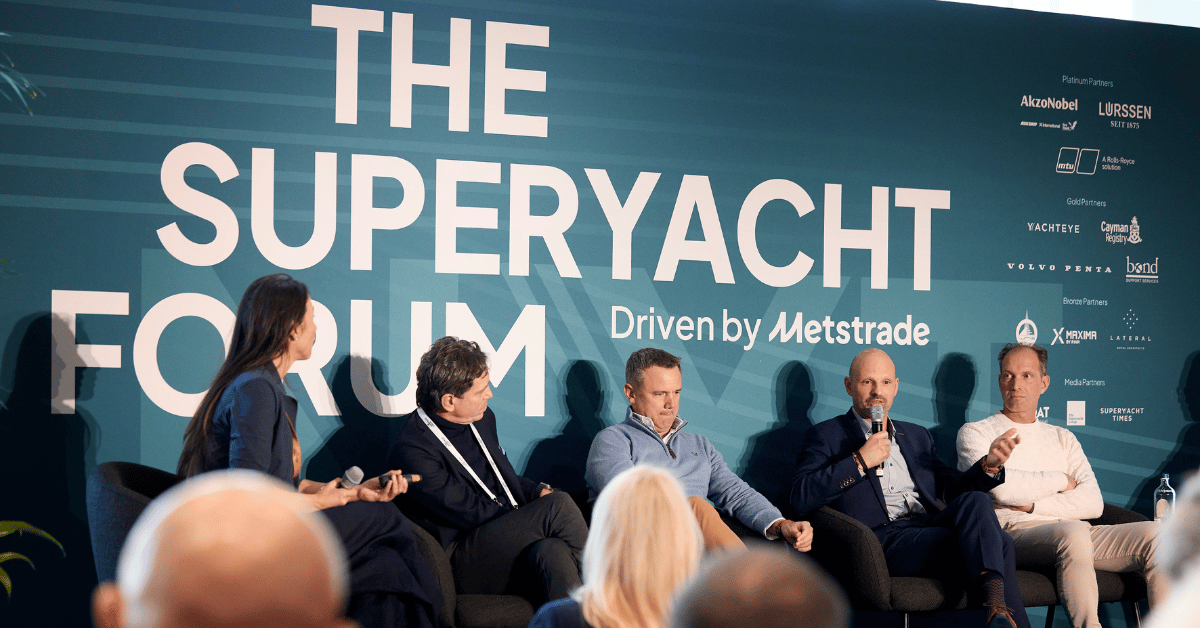
The Superyacht Forum’s 2025 The Next Step for HVO: Breaking Down the Barriers to Adoption panel comprised:
- Chris Warde, Head of Peninsula Yacht Services
- Julien Thiel, CEO of Deasyl
- Jean Marime Berthet of charter yacht Lammouche
- Nicola Pomi, Vice President Yacht & Superyacht Division, Volvo Penta
- Tobias Kohl, Vice President Application Engineering Marine for Rolls Royce Solutions
- Hanna Dabrowska, Technical Director of the Water Revolution Foundatio